How much is my Pokémon card worth?
A Pokémon card is worth what the same card, in the same version and condition, has recently sold for. To find that, identify exactly which card it is (name, set and number), confirm the version (holo, reverse holo or a special stamp), judge the condition honestly, and compare completed sales, not asking prices. Most cards are worth only cents; the money is in full arts, alternate arts, gold cards and vintage holos.
Value any card in four steps
- Find the set symbol and card number. Both are at the bottom of the card, for example 199/165 next to the set symbol. Together with the name, they identify one specific card. Our set pages list every card in number order.
- Identify the version. Holo, reverse holo, Poké Ball or Master Ball pattern, 1st Edition, shadowless and promo stamps all have different prices.
- Estimate the condition. Check the corners and edges, look for scratches on the surface, and see how centered the borders are. Whitening or a crease lowers the value a lot compared with a near-mint copy.
- Look up sold prices. eBay sold listings, TCGplayer's market price, PriceCharting and 130point all show real sales. Current listings don't tell you much, since sellers can ask any price.
What makes a Pokémon card valuable
| Factor | Why it matters |
|---|---|
| Rarity | Special Illustration Rares, gold Hyper Rares and secret rares are much harder to find. Our rarity guide explains the symbols. |
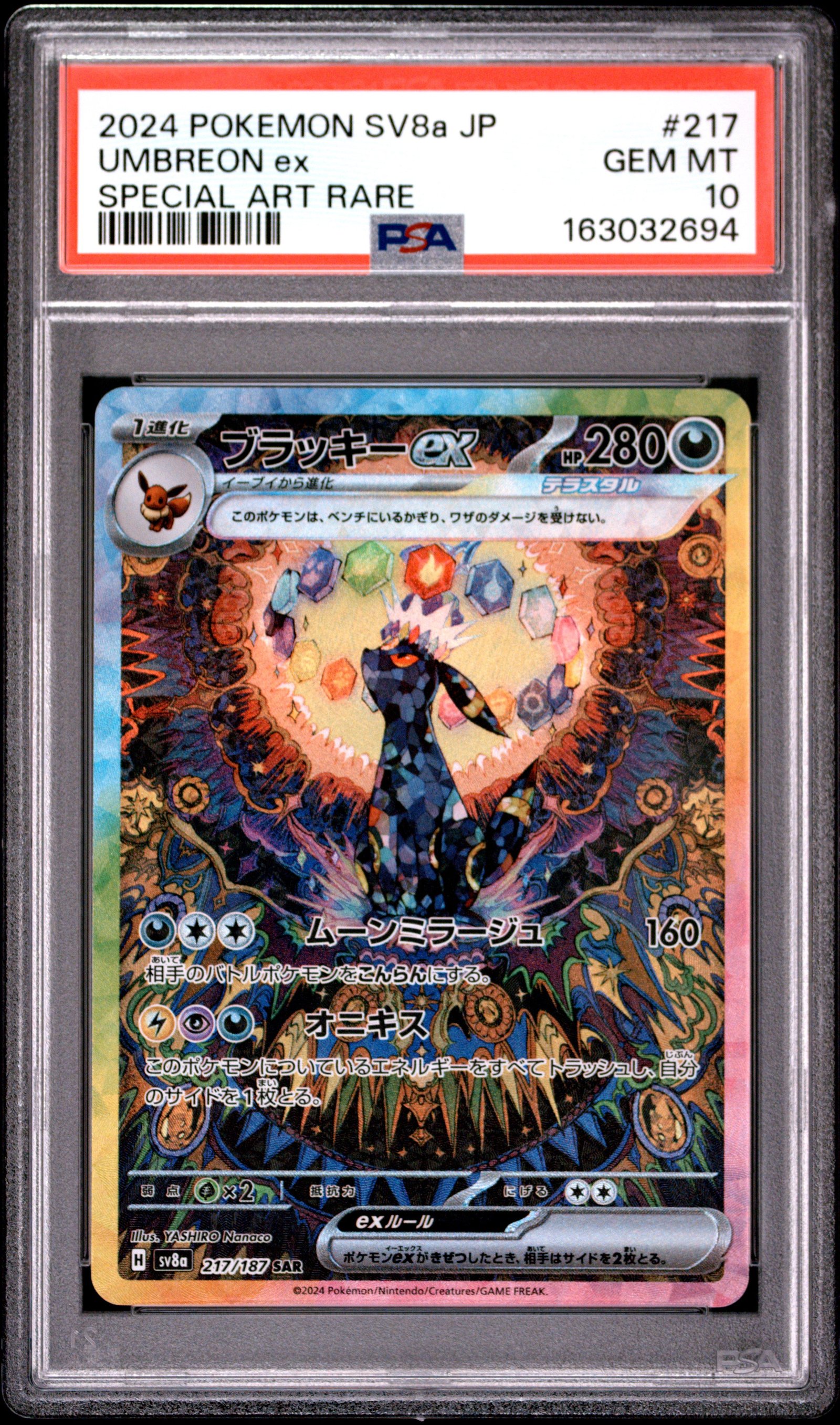
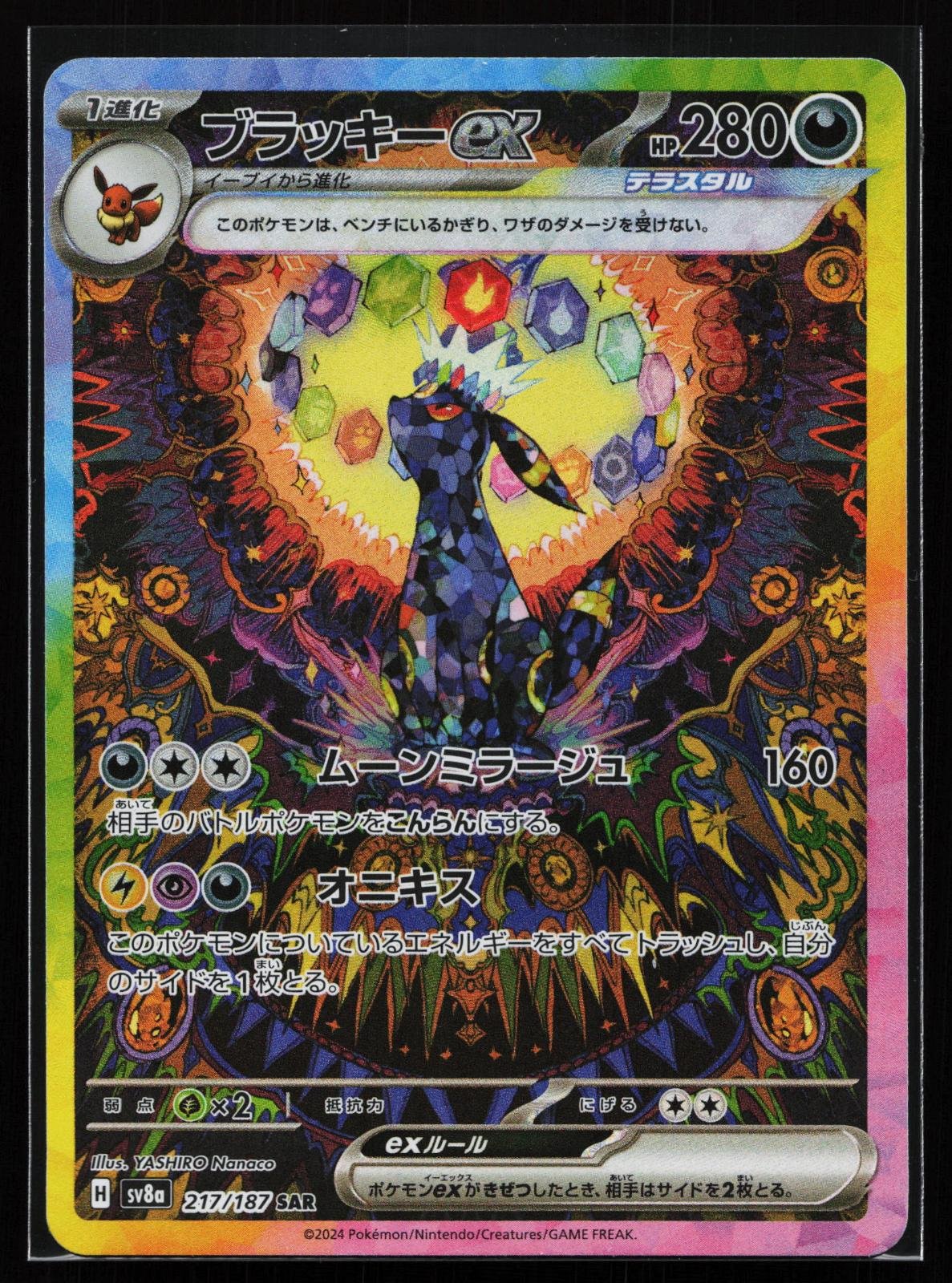
| The Pokémon | Charizard, Pikachu, Umbreon, Gengar, Mew and Eevee sell for more. Compare our Charizard and Umbreon pages. |
| Artwork | An eye-catching full-art or alternate-art card sells for more than a standard card of the same Pokémon. |
| Age and edition | Wizards of the Coast cards from 1999 to 2003, especially 1st Edition and shadowless prints, are scarce in good condition. |
| Grade | A PSA 10 can be worth several times the raw card, while a PSA 8 may add little. |
| Language | Japanese cards sometimes sell for more than English and sometimes less, so check both. |
Raw vs graded value
Price guides show a "raw" price for ungraded cards and separate prices for PSA 10, PSA 9 and lower grades. PSA charges about $25 to $80 or more per card in 2026, so it is only worth grading when the graded price is clearly higher than the raw value plus the fees. Our grading cost guide has the details.
Cards worth checking
When going through a collection, check full art and alternate art cards, gold cards, 1st Edition and shadowless Base Set holos, Gold Stars, Shining and Crystal cards from the early 2000s, event and contest promos, and modern chase cards from sets like 151, Evolving Skies and Prismatic Evolutions. Our single cards show live US dollar prices for more than 9,000 Pokémon cards.
Common questions
How do I know if my Pokémon card is worth money?
Start with the rarity symbol and the style of the card. Stars, full-art designs, gold cards and special stamps are worth looking up. Then search for the exact name and number in sold listings.
Are old Pokémon cards worth anything?
Some are worth a lot. Holos from the 1999 Base Set, Jungle and Fossil, 1st Edition prints and early promos can be valuable in good condition, while commons from those sets usually sell for a few dollars at most. Our vintage card guide covers this in detail.
What is TCGplayer's market price?
An average of recent completed sales on TCGplayer for that card and condition. It is reliable for raw cards; for expensive cards, also look at the latest individual sales.
Are Japanese and English cards worth the same?
Not always. Some Japanese chase cards sell for more because of print quality and earlier release, others for less. Check each language separately; see Japanese vs English cards.